
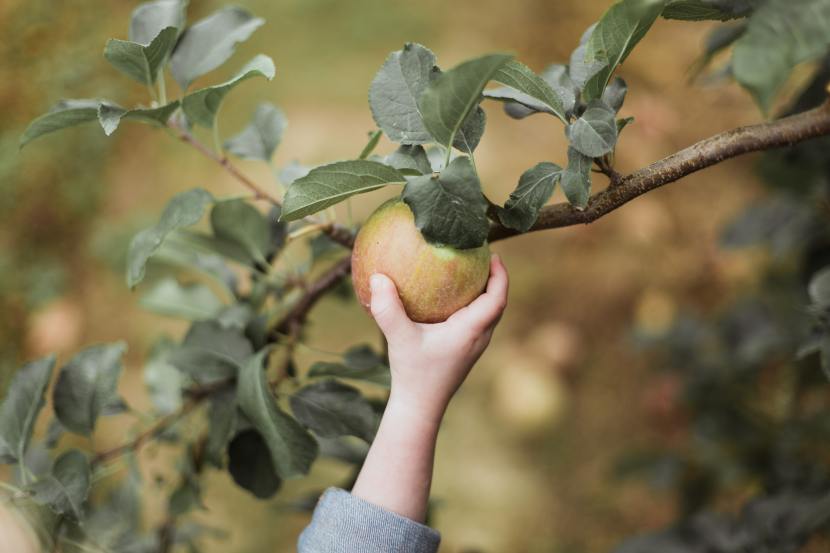
An apple hangs from a tree and a carrot grows from the ground. But what is cheese made from? And a hot dog? Much of the food we buy in the supermarket has been extensively processed and thoroughly packaged, making it look nothing like the original food source. Do children actually know where the food on their plate comes from? That is the question investigated in this American study.
CORE
- The study shows that young children are unable to correctly identify where commonly eaten food products—such as hamburgers and fries—come from. For example, 40% of children thought that bacon comes from a plant.
- In addition, the majority of children (65%) thought that cows, pigs, and chickens are not suitable for eating.
- According to the authors, these results may be due to the high degree of processing of our food: by the time children get an animal product on their plate, it is no longer recognizable as an animal.
- An additional explanation may be that American parents do not like to talk to their children about the origin of meat. For example, because they want to protect their children from information about the unpleasant conditions under which animals are kept and slaughtered.
- Because many children identify animal products as inedible at a young age, the authors see this period as a unique opportunity to encourage a (more) plant-based diet. This is one of the most effective ways to reduce greenhouse gas emissions and prevent further global warming.
RESEARCH METHOD
WHAT?
This study investigated the extent to which children can recognize food products as animal or plant-based and whether they can identify whether products are edible or not.
WHO?
176 American children aged 4 to 7 years.
HOW?
All children performed two sorting tasks. In the first task, they sorted 13 products according to origin: animal (such as cheese and chicken nuggets) or plant (such as French fries and carrots). The products were depicted on cards that the children had to place in a box covered with leaves (plant-based) or fur (animal-based). In the second task, the children sorted 14 products according to their edibility for humans: products that are normally consumed in America (chicken and tomatoes) and products that are not (dog and sand). The products that children sorted as edible were placed in a plastic mouth; the products they sorted as inedible were placed in a trash can.
RESULTS
Results of the sorting task on the origin of food showed that almost all animal products (with the exception of milk) were incorrectly sorted as non-animal by at least 30% of the children. More than a third of the children (36-41%) incorrectly classified various types of meat (hamburgers, hot dogs, bacon) as plant-based. Younger children (4-5 years old) made more sorting errors than older children (6-7 years old), specifically when it came to meat and other animal products (such as cheese and milk).
Results from the sorting task on the edibility of food showed that the four most common errors concerned animals that are frequently consumed in Western countries. More than 65% of children classified cows, pigs, and chickens as inedible (for fish, this was 33%). This percentage was higher for mammals and for younger children: more than 80% of 4- to 5-year-olds classified cows and pigs as not OK to eat. In this task, too, younger children made more mistakes than older children, specifically on items related to the edibility of animals.
This sci-fly was written by Levie Karssen (Behavioral Science Institute, Radboud University) for RAD-blog, the blog about smoking, alcohol, drugs, and diet.
DETAILS
Hahn, E. R., Gillogly, M., & Bradford, B. E. (2021). Children are unsuspecting meat eaters: An opportunity to address climate change. Journal of Environmental Psychology, 78, 101705. https://doi.org/10.1016/j.jenvp.2021.101705
Leave a Reply