
Exercise is good for mental and physical health. Unfortunately, however, many people do not get enough exercise. Figures from Statistics Netherlands (CBS) show that more than half of the Dutch population does not get enough exercise.1
Promoting exercise is therefore of great importance to health. Exercise apps (such as RunKeeper and Strava) can play a promising role in this. The people around us (including those in our online network) can potentially influence our exercise habits. This influence can manifest itself, for example, through social support (such as receiving virtual likes) or through social comparison (where people evaluate their own exercise habits based on the exercise habits of others). However, it is not yet known to what extent this online social network actually influences exercise (e.g., running) and how this influence works (e.g., through social support or comparison). This is what researchers at Radboud University in Nijmegen and the University of Groningen have investigated.
CORE
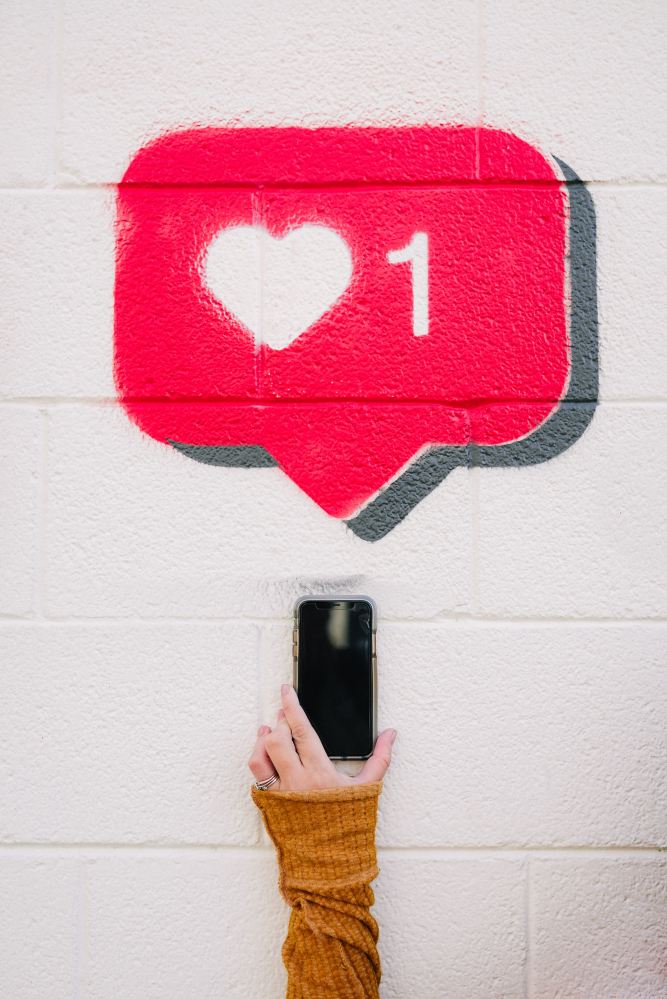
Runners within the Strava exercise app run more often and for longer when they receive more virtual likes from others. Receiving online social support can therefore have a positive influence on the frequency and duration of running. Over time, the running behavior of Strava runners becomes more similar to the running behavior of people from whom they receive virtual likes. It therefore appears that runners compare themselves to their online friends and thus become more similar to each other. However, it also appears that runners become more like friends from whom they receive virtual likes who are less active than friends who are more active than themselves. It therefore seems that online friends who run less (often) can make other runners feel that it is okay to run less (often).
RESEARCH METHOD
WHAT?
This study investigated the extent to which receiving “Kudos” (virtual likes) and the running activities of friends who gave these Kudos affect the running behavior of athletes in the Strava exercise app. The researchers measured both the frequency (days per week) and duration (hours per week) of running from the exercise activities recorded in the exercise app.
WHO?
In the current study, five existing Strava clubs were selected that were extensions of existing running clubs. In total, there were 329 Dutch participants. The participants took part in the study for 12 months, gave a total of 19,026 Kudos to each other, and recorded 10,037 running activities totaling 10,027 hours.
HOW?
For this study, data from users of the Strava sports app was analyzed. In this app, athletes record their running activities, and the app tracks how often they run and for how long. Strava users can also respond to other people’s activities within clubs (groups of online friends), for example by giving Kudos. Based on the app’s user data, the researchers determined how often and for how long the participants in this study ran, which participants gave each other Kudos, and who their Kudos friends were.
RESULTS
The study found that participants ran more when they received Kudos on their Strava-registered running activities. This applied to both the frequency (days per week) and duration (hours per week) of running. The authors gave the following example:
Consider two fictional runners, A and B, who are members of a random club from a hypothetical population of Strava clubs. The runners are completely identical, except that runner A has received Kudos from one more club member than runner B. In that case, runner A is almost 3% more likely than runner B to run one more session per week.
In addition, it was found that participants’ running behavior became more similar to that of friends from whom they had received Kudos. It turned out that runners became more similar to Kudos friends who ran less often and for shorter periods than to Kudos friends who ran more often and for longer periods than themselves.
1 In total, 44 percent of adults in the Netherlands met the Health Council’s exercise guidelines in 2022 (Health Survey/Lifestyle Monitor core CBS in collaboration with RIVM, 2022). For adults, these guidelines consist of two parts. First, the recommendation is to engage in at least 2.5 hours of moderate-intensity exercise (such as walking or cycling) spread over several days per week. Secondly, the recommendation is to engage in so-called “muscle and bone strengthening activities” (such as soccer or strength training) at least twice a week, combined with balance exercises for older adults (Health Council of the Netherlands, 2017). Source: https://www.cbs.nl/nl-nl/longread/rapportages/2023/on–gezonde-leefstijl-2022-opvattingen-motieven-en-gedragingen/4-sporten-en-bewegen.
DETAILS
Franken, R., Bekhuis, H., & Tolsma, J. (2023). Kudos make you run! How runners influence each other on the online social network Strava. Social Networks, 72, 151-164.
This sci-fly was written by Nina van den Broek (Radboud University) for RAD-blog, the blog about smoking, alcohol, drugs, and diet.
Leave a Reply