
*Disclaimer: Please note that parts of this blog have been automatically translated.*
Average alcohol consumption among students is generally relatively high. Meanwhile, however, dissent can be heard. TikTok is full of them: videos of students saying that they no longer drink alcohol. Not just to be physically healthier, but mostly to combat ‘hangxiety’.
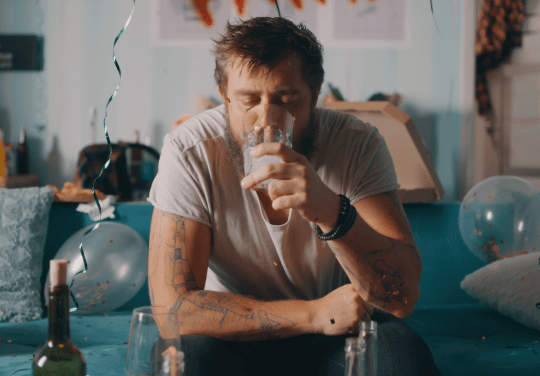
Hangxiety (‘hangover-anxiety’) means that a person experiences feelings of anxiety, gloom, fear or shame the day after drinking alcohol1,2. In a study with Dutch students, 22.6% said they felt anxious after alcohol consumption, and 34.2% felt depressed1. So, in a lecture hall with 200 students who would have been out the day before, there would be about 45 to 68 students – apart from physical hangovers – with this ‘mental hangover’.
Hangxiety occurs because substances in the brain have to ‘reset’ after drinking alcohol. These substances are either enhanced or reduced while drinking alcohol, making you feel more relaxed3,4. When the alcohol wears off, the brain tries to restore a normal balance. This can cause (over)compensation3. The substances that made you feel relaxed later cause the opposite effect. If someone was already feeling restless or anxious, these feelings may even be perceived as worse than before drinking alcohol5,6. A night out drinking with friends to relieve some stress before an exam can therefore backfire.
In principle, the best solution against hangxiety is very simple: don’t drink alcohol4. In reality, this turns out to be easier said than done, especially for students. Group influence plays a big role among students when it comes to alcohol7. If there is a lot of drinking in a group, for example, at a student union or during induction week, someone in that group is also more likely to drink more. Because alcohol consumption is so normalised among students, it can be difficult to distance oneself from this8,9. Yet this seems to be slowly changing. Within student life, alcohol-free options are increasingly encouraged9,10. Being surrounded by friends who drink less or not at all, and not pressuring others, makes it easier to say ‘no’ to alcohol. Perhaps the spread of the hangxiety norm can also contribute to this.
This blog was written by Eva Struijk for the course Recent Developments in Risk Behavior, Master’s Program PWO, 2024.
References
1. Van Schrojenstein Lantman, M., Mackus, M., Van de Loo, A. J., & Verster, J. C. (2017). The impact of alcohol hangover symptoms on cognitive and physical functioning, and mood. Human Psychopharmacology Clinical And Experimental, 32(5). https://doi.org/10.1002/hup.2623
2. ADF (Alcohol and Drug Foundation) (2023). What is hangxiety? https://adf.org.au/insights/what-is-hangxiety/
3. Marsh, B., Carlyle, M., Carter, E., Hughes, P., McGahey, S., Lawn, W., Stevens, T., McAndrew, A., & Morgan, C. J. (2018). Shyness, alcohol use disorders and ‘hangxiety’: A naturalistic study of social drinkers. Personality And Individual Differences, 139, 13–18. https://doi.org/10.1016/j.paid.2018.10.034
4. Landau, M. D. (2024). What’s worse than a hangover? Hangxiety. Here’s why it happens. https://www.nationalgeographic.com/premium/article/drinking-anxious-morning-after-hangover
5. Kim, A. J., Merlo, A., Mackus, M., Bruce, G., Johnson, S. J., Alford, C., Sherry, S. B., Stewart, S. H., & Verster, J. C. (2023). Depression, Anxiety, and Stress among Hangover-Sensitive and Hangover-Resistant Drinkers. Journal Of Clinical Medicine, 12(8). https://doi.org/10.3390/jcm12082766
6. Tellez-Monnery, K., Berghoff, C. R., & McDermott, M. J. (2023). Investigating the effects of emotion dysregulation and repetitive negative thinking on alcohol hangover anxiety and depression. Addictive Behaviors, 140, 107619. https://doi.org/10.1016/j.addbeh.2023.107619
7. Van der Horst, M. (2024). Groepsvorming van invloed op alcohol-, drugs- en tabaksgebruik studentenverenigingen. https://www.trimbos.nl/actueel/nieuws/groepsvorming-van-invloed-op-alcohol-drugs-en-tabaksgebruik-studentenverenigingen/
8. Hill, K., Mansbridge, S., Watts, A., & Saravanja, A. (2024). “It’s expected that students want to get drunk. That needs to change”: alcohol abstainer and light drinking university student experiences. Health Education. https://doi.org/10.1108/he-05-2024-0072
9. De Brug Nijmegen (2023). Studenten zetten zich in voor inclusiviteit rondom alcoholgebruik. https://www.brugnijmegen.nl/nieuws/algemeen/171379/studenten-zetten-zich-in-voor-inclusiviteit-rondom-alcoholgebruik
10. Van der Kraan, M. (2023). Studieverenigingen: ‘We willen af van de sociale druk om te drinken’. Mare. https://www.mareonline.nl/studentenleven/studieverenigingen-we-willen-af-van-de-sociale-druk-om-te-drinken/
11. Queensland Health (2023). Hangxiety: why alcohol can leave you feeling anxious. https://www.health.qld.gov.au/newsroom/features/hangxiety-why-alcohol-can-leave-you-feeling-anxious
Leave a Reply