
*Disclaimer: Please note that parts of this English blog were automatically translated.*
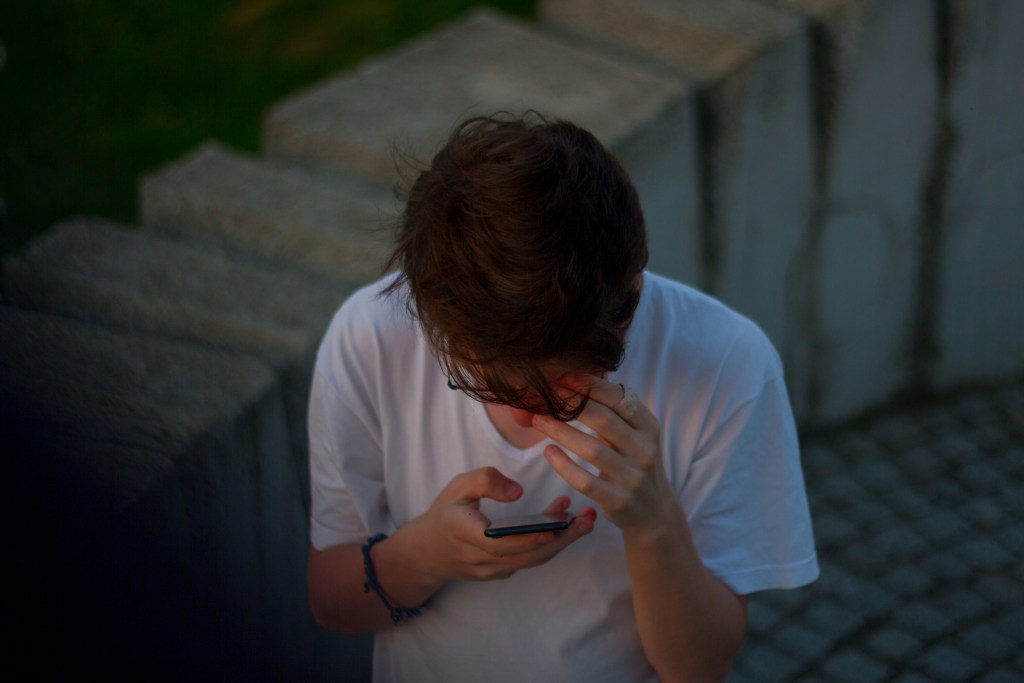
Have you seen the series Adolescence? In this gripping series, we follow a 13-year-old boy suspected of murder. The series movingly shows how online communities – in this case, the sexist “manosphere” – can influence young people’s thinking and behavior. It underscores how decisive the social environment can be in adolescence. Where previously the classroom at school primarily set the norm, there is now a second, digital world in which young people influence each other.
Body image and social norms
Youth are exposed to social norms about physical appearance and peers influence each other’s body image (1). Popularity in the classroom may be associated with pressure to conform to beauty ideals. For example, it appears that popularity in girls is associated with more dieting (2). Social norms are not only visible in the offline world, but are reinforced through social media. There, young people see daily (ideal) images and messages from peers and influencers, often made less realistic through editing, filters or careful selection.
Social media and body image: Two sides of a coin
The association between social media and body image is not uniformly negative. Studies on how social media contribute negatively and positively to body image and eating behaviors show that social media use is associated with more negative body image and disturbed eating behaviors (e.g., 3, 4). For example, editing and taking selfies is associated with negative feelings about one’s own body (5). At the same time, following body positivity accounts can in some cases contribute to a more positive body image (6). For many young people, social media also provide social support, inspiration or self-expression (7). Important new research shows that the risks of social media on well-being seem especially high for young people who are already vulnerable, such as those with depressive symptoms (8).
Underexplored questions in research
Although much research has been done, important questions remain unanswered. When and for whom are social media harmful and what mechanisms play a role? Are some platforms (Instagram, Tiktok) more risky than others? How do personality and behavior, for example the tendency to compare oneself and perfectionism, contribute to this?
Within our research group, we aim to shed more light on these themes. We are working on a review of (literature on) which features of social media are related to body image and eating behavior. I am also planning studies on mental well-being among different user profiles (based on e.g., degree of problematic, frequent and passive social media use) and on how daily social media use might relate to mood.
What can we do?
As with all new technologies, we can no longer stop their arrival, but we can become aware of their influence. In Adolescence, it became clear that online communities, sometimes invisible to the outside world (parents, teachers), can do a lot of damage. The Adolescence series has now been made available to high schools as a conversation starter (9). Awareness and conversations seem important in dealing with social media, especially since social media indeed appears to be able to affect body image negatively. Vulnerable young people especially deserve extra attention here, as the online world holds more dangers for them.
This blog was written by Aafke Swinkels (Behavioral Science Institute, Radboud University) for RAD-blog, the blog about smoking, alcohol, drugs and diet.
References
1. Reel, J., Voelker, D., & Greenleaf, C. (2015). Weight status and body image perceptions in adolescents: Current perspectives. Adolescent Health, Medicine and Therapeutics, 149. https://doi.org/10.2147/ahmt.s68344 .
2. Swinkels, A., van den Broek, N. & Cillessen, AHN (2025). Longitudinal associations of (un)popularity with weight perceptions and dieting in adolescence. Journal of Youth and Adolescence, 54 , 704–719. https://doi.org/10.1007/s10964-024-02090-8 .
3. Salomon, I., & Brown, C.S. (2019). The selfie generation: Examining the relationship between social media use and early adolescent body image. The Journal of Early Adolescence , 39 (4), 539–560.
4. Wilksch, S. M., O’Shea, A., Ho, P., Byrne, S., & Wade, T. D. (2020). The relationship between social media use and disordered eating in young adolescents. International Journal of Eating Disorders , 53 (1), 96–106.
5. Vandenbosch, L., Fardouly, J., & Tiggemann, M. (2022). Social media and body image: Recent trends and future directions. Current Opinion in Psychology , 45 . https://doi.org/10.1016/j.copsyc.2021.12.002.
6. Fioravanti, G., Bocci Benucci, S., Ceragioli, G., & Casale, S (2022). How the exposure to beauty ideals on social networking sites influences body image: A systematic review of experimental studies. Adolescent Research Review, 7 , 419–458. https://doi.org/10.1007/s40894-022-00179-4 .
7. Uhls, Y. T, Ellison, N. B., & Subrahmanyam, K. (2017). Benefits and costs of social media in adolescence. Pediatrics , 140 (Supplement_2): S67–S70. 10.1542/peds.2016-1758 E
8. Janssen, LHC, Valkenburg, PM, Keijsers, L., & Beyens, I. (2025). A harsher reality for adolescents with depression on social media. Scientific Reports, 15 (1), 10947. Doi: 10.1038/s41598-025-89762-y.
9. Nu.nl (April 2025). The hit series “Adolescence” will become a teaching aid in Dutch secondary schools. https://www.nu.nl/film/6352124/hitserie-adolescence-wordt-lesmateriaal-op-middelbare-scholen-in-nederland.html?referrer=https%3A%2F%2Fwww.google.com%2F [/spoiler]
Leave a Reply