
*Disclaimer: Please note that parts of this English blog were automatically translated.*
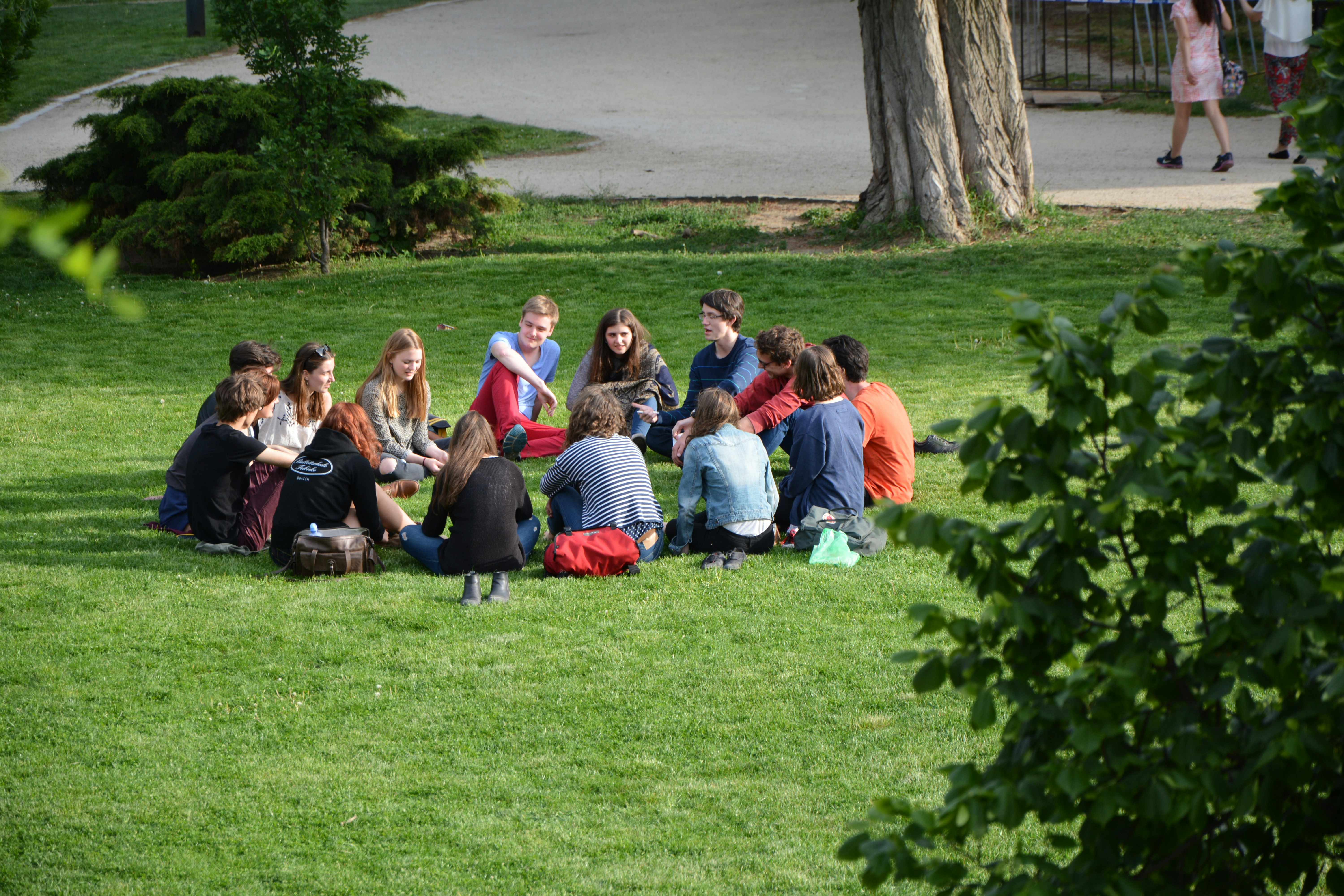
The new academic year has begun, which means that orientation weeks for new students are already behind us. During orientation week, incoming students get to know the city, their college or university, the nightlife, and their future classmates. However, orientation week is also known for the significant role alcohol plays, and criticism regarding this is growing (1).
Alcohol During Orientation Week
Orientation week and alcohol seem to be inextricably linked. There is often an extensive nightlife program, featuring large student parties where drinking is frequently encouraged. Numerous studies have shown that there is an increase in alcohol consumption among students during such orientation weeks (2–4). On average, new students drink twice as much alcohol during orientation week as they did in high school (3). They also experience more negative consequences of their alcohol use, such as memory loss or physical violence (5). This increase is not limited to orientation week alone but can also lead to more (risky) alcohol use during the rest of the academic year (6).
Excessive alcohol consumption thus seems to be part of the experience
This initial introduction to student life, in which alcohol plays a major role, shapes students’ overall perception of student life. During that first week of college, a very strong norm is established in which excessive alcohol consumption is considered normal, seems to be part of the experience, and is even encouraged. This can influence students’ perceptions of their peers’ alcohol consumption. For example, the focus on alcohol during orientation week may lead students to overestimate their peers’ alcohol consumption or give them the impression that their peers are more accepting of excessive alcohol consumption than they actually are (7). Numerous studies have shown that overestimating these so-called social drinking norms leads to an increase in one’s own alcohol consumption (8,9). This is partly because students want to conform to the behavior they (incorrectly) perceive as normal—namely, drinking large amounts of alcohol—a phenomenon known as “pluralistic ignorance” (10). Or it may be because students who already drink excessively believe that everyone else drinks excessively as well, making them less likely to change their (problematic) behavior (false consensus) (10,11). Furthermore, it appears that when new students view excessive alcohol consumption as an integral part of college life, they are more likely to drink excessively during their first year of college (12).
In conclusion
Fortunately, there are also an increasing number of counter-movements, such as “Choose your Cheers”, a campaign conceived and launched by students that aims to normalize the consumption of non-alcoholic beverages. Low-stimulus events are also being organized, such as “No Rush Night,” which emphasizes calmer and smaller-scale activities (organized by the Arnhem and Nijmegen University of Applied Sciences). These counter-movements are not only important for making orientation week more inclusive but also represent a significant step toward reducing excessive and problematic alcohol use among students.
This blog was written by Nina Hoffland (Radboud University) for RAD-blog, the blog about smoking, alcohol, drugs, and diet.
References
- Van Arendonk F. Introweek gooit het roer om: minder drank, meer diepgang. Nationale Onderwijsgids [Internet]. 2026. Available from: https://www.nationaleonderwijsgids.nl/universiteit/introweek-gooit-het-roer-om-minder-drank-meer-diepgang/
- Myrtveit SM, Askeland KG, Knudsen AK, Knapstad M, Olsen R, Nedregård T, et al. Risky drinking among Norwegian students: Associations with participation in the introductory week, academic performance and alcohol-related attitudes. Nordic Studies on Alcohol and Drugs. 2016 Nov;33(4):361–80. doi:10.1515/nsad-2016-0031
- Riordan BC, Scarf D, Conner TS. Is Orientation Week a Gateway to Persistent Alcohol Use in University Students? A Preliminary Investigation. J Stud Alcohol Drugs. 2015 Mar;76(2):204–11. doi:10.15288/jsad.2015.76.204
- Tremblay PF, Graham K, Wells S, Harris R, Pulford R, Roberts SE. When Do First-Year College Students Drink Most During the Academic Year? An Internet-Based Study of Daily and Weekly Drinking. Journal of American College Health. 2010 Mar 24;58(5):401–11. doi:10.1080/07448480903540465
- Merrill JE, Wardell JD, Read JP. Drinking Motives in the Prospective Prediction of Unique Alcohol-Related Consequences in College Students. J Stud Alcohol Drugs. 2014 Jan;75(1):93–102. doi:10.15288/jsad.2014.75.93
- Riordan BC, Scarf D, Conner TS. Is Orientation Week a Gateway to Persistent Alcohol Use in University Students? A Preliminary Investigation. J Stud Alcohol Drugs. 2015 Mar;76(2):204–11. doi:10.15288/jsad.2015.76.204
- Kypri K, Langley JD. Perceived social norms and their relation to university student drinking. J Stud Alcohol. 2003 Nov;64(6):829–34. doi:10.15288/jsa.2003.64.829
- DiBello AM, Miller MB, Hatch MR, Mastroleo NR, Carey KB. Longitudinal analysis for between‐ and within‐person influences of descriptive alcohol drinking norms and attitudes on drinking outcomes. Alcohol, Clinical and Experimental Research. 2025 Mar 27;acer.70008. doi:10.1111/acer.70008
- Neighbors C, Lee CM, Lewis MA, Fossos N, Larimer ME. Are Social Norms the Best Predictor of Outcomes Among Heavy-Drinking College Students? J Stud Alcohol Drugs. 2007 Jul;68(4):556–65. doi:10.15288/jsad.2007.68.556
- Berkowitz AD. The Social Norms Approach [Internet]. 2004 [cited 2024 Dec 18]. Available from: http://www.alanberkowitz.com/articles/social_norms.pdf
- Miller DT. A century of pluralistic ignorance: what we have learned about its origins, forms, and consequences. Front Soc Psychol. 2023 Oct 16;1:1260896. doi:10.3389/frsps.2023.1260896
- Sher KJ, Rutledge PC. Heavy drinking across the transition to college: Predicting first-semester heavy drinking from precollege variables. Addictive Behaviors. 2007 Apr;32(4):819–35. doi:10.1016/j.addbeh.2006.06.024
Leave a Reply