
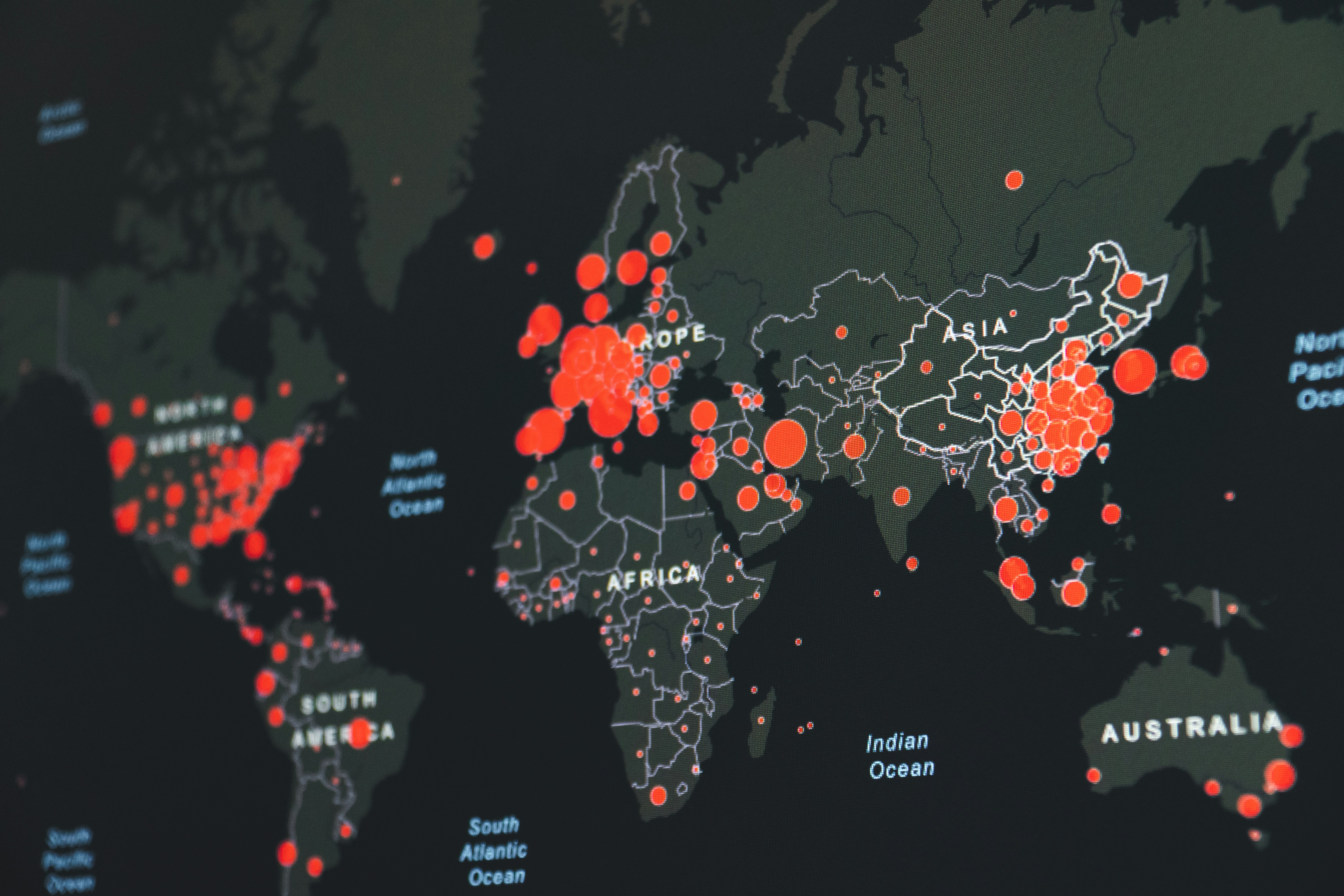
Imagine this: you’re 20 years old when the COVID-19 pandemic begins. Classes are held online, sports come to a halt, and your social life is on the back burner. Now imagine you’re 75: you’re worried about your physical health, your social contact is limited, and your hospital treatment is being postponed. The same crisis, but it doesn’t affect everyone the same way.
Our own research¹, based on large-scale national data from more than 600,000 Dutch people, shows that the perceived impact of the COVID-19 pandemic varies greatly across age groups. For example, more than half of adolescents (52%) and young adults (60%) reported a major negative impact from the COVID-19 pandemic, compared to significantly fewer adults (27%) and older adults (19%).
Health is more than just individual components
Negative impact is a broad concept and can affect multiple health-related domains, such as physical health, mental health, and lifestyle. We know from previous studies that, within the domain of physical health, many people experienced symptoms such as respiratory problems and fatigue², while within the domain of mental health, anxiety, depression, and stress increased during the pandemic³⁴⁵. In addition, daily routines changed (lifestyle domain). People became less physically active⁶ and ate less healthily⁷. While smoking, alcohol, and drug use generally decreased among adolescents and young adults, these behaviors actually increased among adults and older adults⁸,⁹. Many of these studies examined the impact of the COVID-19 pandemic on a single domain, even though we know that these domains are not independent of one another¹⁰. However, insights into how different domains were interrelated during the pandemic, and how these relationships differed across age groups and based on perceived impact, were still lacking.
A Different Perspective
To better understand these connections, we examined factors from all three health domains not in isolation, but in relation to one another. We used network analyses, which revealed how different factors are interconnected. In such a network, factors such as stress, physical activity, and substance use form the nodes, and the connections show how strongly they are linked. The darker and thicker a connection in the network, the stronger the link between two factors. By looking at the big picture, we discovered which factors are central and which are linked to one another (either strongly or less strongly).
What do we see among young adults?
We examined four age groups (youth, young adults, adults, and older adults), but for this blog we’ll focus on young adults. Not only did this group experience a strong negative impact from the pandemic more frequently (as mentioned above), but the networks within this group also show a clear correlation within and across health domains (see figure below). Within the lifestyle domain (purple circles), we observed that various forms of substance use (such as smoking, alcohol, and other drugs) were strongly interrelated. Within the mental health domain, we observed that mental health was strongly linked to other factors in this domain, such as resilience, loneliness, and stress. In addition, we also observed strong connections between domains. For example, it turned out that perceived general health (No. 16, physical health domain, blue circles) plays a central role and is strongly linked to both mental health (mental health domain, orange circles) and physical activity (lifestyle domain, purple circles). Finally, we observed that some relationships between two factors are even stronger in the network of young adults who found the pandemic particularly difficult; this applies, for example, to the relationship between mental health (circle No. 10) and perceived general health (circle No. 16). This suggests that health-related factors are particularly strong among young adults who found the pandemic particularly difficult.

It’s not a “one-size-fits-all” approach?
Despite the similarities in the networks across all age groups, such as the central role of perceived general health and the strong connections between the various health domains, we also observed differences. These insights underscore the importance of considering differences between age groups and in the perceived impact when devising strategies to mitigate the consequences of a health crisis. This raises the question: How can policy take into account differences between age groups and the perceived impact?
What can we learn from this?
Health is not made up of separate domains, but rather of an interconnected system of factors that are (more or less) interrelated. In our research, we observed that these interconnections depend heavily on the stage of life people are in and how they experience the impact of the pandemic. The same crisis can therefore be experienced differently by different people. Understanding these differences is precisely what can help us better account for the diverse experiences and needs of different groups during future health crises.
The study was funded by ZonMw (10430222410006).
This blog post was written by Sasja Noach, Jacqueline Vink, and Kirsten van Hooijdonk (Behavioral Science Institute, Radboud University Nijmegen) for RAD-blog, the blog about smoking, alcohol, drugs, and diet.
References:
- van Hooijdonk, K. J. M., Noach, S. D., Otten, R., & Vink, J. M. (2026). A cross-generational investigation of physical health, mental health, and lifestyle during the COVID-19 pandemic in the Netherlands: results from network analyses. Preprint. https://doi.org/10.17605/OSF.IO/UMN5G.
- Zeng, N., Zhao, Y. M., Yan, W., Li, C., Lu, Q. D., Liu, L., Ni, S. Y., Mei, H., Yuan, K., Shi, L., Li, P., Fan, T. T., Yuan, J. L., Vitiello, M. V., Kosten, T., Kondratiuk, A. L., Sun, H. Q., Tang, X. D., Liu, M. Y., . . . Lu, L. (2023). A systematic review and meta-analysis of long term physical and mental sequelae of COVID-19 pandemic: call for research priority and action. Molecular Psychiatry, 28(1), 423–433. https://doi.org/10.1038/s41380-022-01614-7
- Samji H, Wu J, Ladak A, Vossen C, Stewart E, Dove N, et al. Review: Mental health impacts of the COVID‐19 pandemic on children and youth – a systematic review. Child and Adolescent Mental Health. 2022;27(2):173–89. https://doi.org/10.1111/camh.12501.
- Schäfer SK, Lindner S, Kunzler AM, Meerpohl JJ, Lieb K. The mental health impact of the COVID-19 pandemic on older adults: a systematic review and meta-analysis. Age and Ageing. 2023;52(9). https://doi.org/10.1093/ageing/afad170.
- Xiong J, Lipsitz O, Nasri F, Lui LMW, Gill H, Phan L, et al. Impact of COVID-19 pandemic on mental health in the general population: A systematic review. Journal of Affective Disorders. 2020;277:55–64. https://doi.org/10.1016/j.jad.2020.08.001.
- Park AH, Zhong S, Yang H, Jeong J, Lee C. Impact of COVID-19 on physical activity: A rapid review. Journal of Global Health. 2022;12:05003. https://doi.org/10.7189/jogh.12.05003.
- Bakaloudi DR, Jeyakumar DT, Jayawardena R, Chourdakis M. The impact of COVID-19 lockdown on snacking habits, fast-food and alcohol consumption: A systematic review of the evidence. Clinical Nutrition. 2022;41(12):3038–45. https://doi.org/10.1016/j.clnu.2021.04.020.
- Layman HM, Thorisdottir IE, Halldorsdottir T, Sigfusdottir ID, Allegrante JP, Kristjansson AL. Substance Use Among Youth During the COVID-19 Pandemic: a Systematic Review. Current Psychiatry Reports. 2022;24(6):307–24. https://doi.org/10.1007/s11920-022-01338-z.
- Roberts A, Rogers J, Mason R, Siriwardena AN, Hogue T, Whitley GA, et al. Alcohol and other substance use during the COVID-19 pandemic: A systematic review. Drug and Alcohol Dependence. 2021;229(Pt A):109150. https://doi.org/10.1016/j.drugalcdep.2021.109150.
- van Hooijdonk KJM, Simons SSH, van Noorden THJ, Geurts SAE, Vink JM. Prevalence and clustering of health behaviours and the association with socio-demographics and mental well-being in Dutch university students. Preventive Medicine Reports. 2023;35:102307. https://doi.org/10.1016/j.pmedr.2023.102307.
Leave a Reply